
The International Cricket Council (ICC) has addressed allegations of preferential treatment after travel disruptions following the ICC Men’s T20 World Cup 2026 sparked controversy among several participating teams. While some sides were able to leave India soon after their elimination, others remained stranded due to ongoing airspace restrictions linked to escalating tensions in parts of the Middle East.
The tournament concluded on Sunday with India defeating New Zealand in a dominant final at the Narendra Modi Stadium in Ahmedabad, but logistical challenges have overshadowed the closing chapter of the global event. Teams including West Indies and South Africa were forced to remain in India for several days due to restricted flight routes and safety concerns affecting international travel.
West Indies and South Africa face extended wait
Both West Indies and South Africa experienced significant delays in leaving India after their campaigns ended. The Caribbean side played their final match of the tournament on March 1, yet the squad remained in the country for over a week due to complications involving flight availability and safe travel corridors.
South Africa encountered similar issues. The Proteas were eliminated in the semi-finals by New Zealand on March 4, but were unable to depart immediately afterward. With several conventional flight routes unavailable, the team stayed in Kolkata awaiting clarity on their travel plans.
Meanwhile, England managed to return home shortly after losing their semi-final against India on March 5, which quickly triggered debate among fans and former players about whether certain teams were being given priority.
Michael Vaughan and players question ICC handling
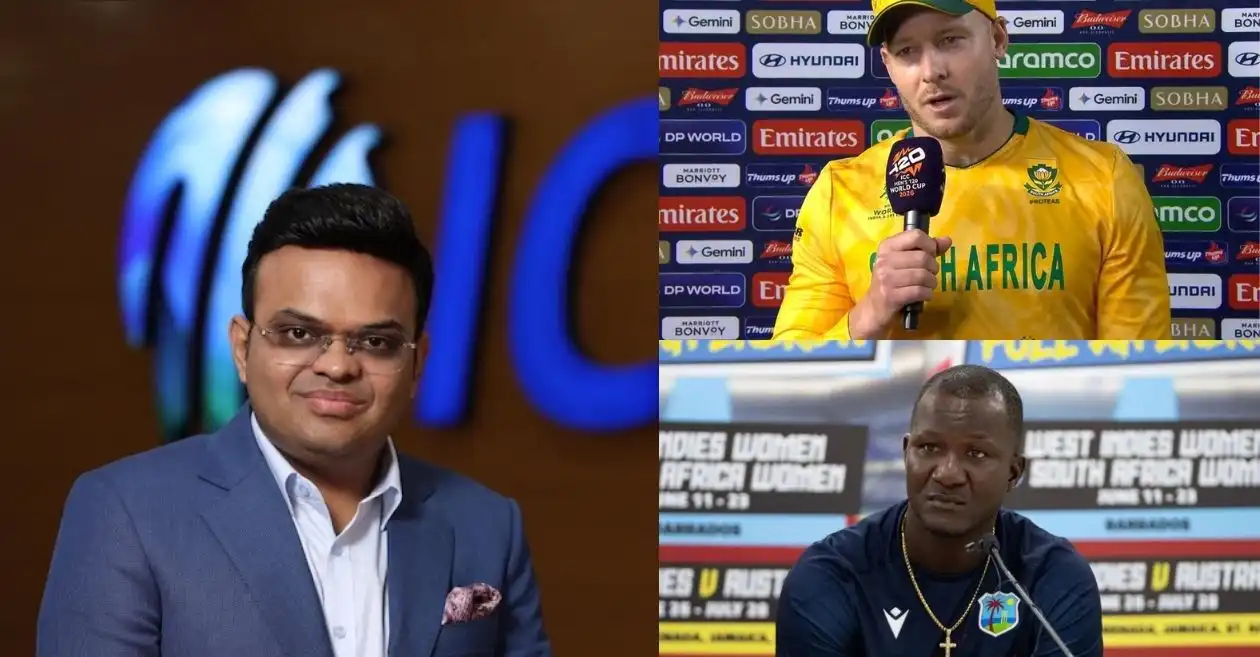
Former England captain Michael Vaughan was among the most vocal critics of the situation, questioning whether the global governing body had treated teams equally.
Vaughan took to social media to express his concerns, stating that all teams should be handled the same regardless of their influence within the ICC structure. His comments fuelled the growing conversation around fairness in logistical arrangements following the tournament.
South African players David Miller and Quinton de Kock also raised questions about the travel situation. Both cricketers publicly wondered why England had secured a charter flight soon after their elimination while the South African contingent was still awaiting clarity regarding their departure.
West Indies head coach Daren Sammy joined the criticism as well, revealing that his team had been waiting nearly a week without a clear plan regarding their travel home.
ICC reacts to the travel bias claims
Responding to the growing backlash, the ICC strongly denied allegations that any team had been given special treatment. According to an ICC spokesperson, departure schedules were determined purely by operational and safety considerations, including airspace access, flight routing permissions, visa logistics, and aircraft availability.
The governing body explained that England’s departure route from Mumbai remained open, allowing the team to travel via North Africa and Egypt without restrictions. However, traditional travel paths used by teams such as West Indies and South Africa typically rely on major Gulf hubs like Dubai and Doha, which have been impacted by ongoing regional tensions and missile warnings.
The ICC emphasised that ensuring the safety of players, support staff, officials, and tournament personnel remained the highest priority while navigating the evolving situation affecting global aviation.
“Decisions on departure sequencing are being driven solely by airspace availability, aircraft routing permissions, visa requirements and operational safety considerations. Any suggestion that teams have been prioritised based on anything other than these constraints is incorrect,” said the spokesperson as quoted by BBC.
“The safety and well-being of players, support staff, officials, and our own workforce remain our absolute priority as we respond to the evolving situation affecting air travel across parts of the Middle East. For instance, the England team and their staff were able to fly out from Mumbai without restriction due to the route’s airspace being unaffected and flights operating as usual. The ICC categorically refutes any claims of bias in this or other instances, and has been fully accommodating of specific demands and conditions put forth by teams,” added the spokesperspon.
Despite the delays, travel arrangements are now being finalised for the affected squads. The South African contingent is scheduled to begin departing on staggered flights, with all members expected to leave India within the next 36 hours. Similarly, members of the West Indies squad have started returning home in batches. Nine individuals have already departed, while the remaining members are expected to leave within the next 24 hours.
For latest cricket news & updates, visit CricketTimes.com.
![IPL 2026 [WATCH]: Mohammed Shami gets pumped up after removing KL Rahul for a golden duck in LSG vs DC clash](https://bd.mcwsports.com/wp-content/uploads/2026/04/Mohammed-Shami-removes-KL-Rahul-in-IPL-2026-x3zO9m-1080x657.webp)